Nobody orders wedding flowers by the stem, but thinking in counts helps a Charlotte couple understand where a flower order actually goes. A wedding that feels flower filled in photos is usually not carrying more flowers than a sparse one. It is carrying them in the right places, in proportions a florist works out almost like arithmetic. This is that arithmetic, in plain terms, so your consultation starts from understanding rather than sticker shock.
Personal flowers: the count starts with people
The personal list is driven by the wedding party. One bridal bouquet, a bouquet for each bridesmaid, a boutonniere for the groom, each groomsman, fathers, and usually grandfathers and officiants, plus corsages for mothers and grandmothers. A party of six on each side quietly becomes twenty personal pieces before a single table is touched. Bridesmaid bouquets are typically designed as smaller echoes of the bridal bouquet, which keeps the look unified in photographs.
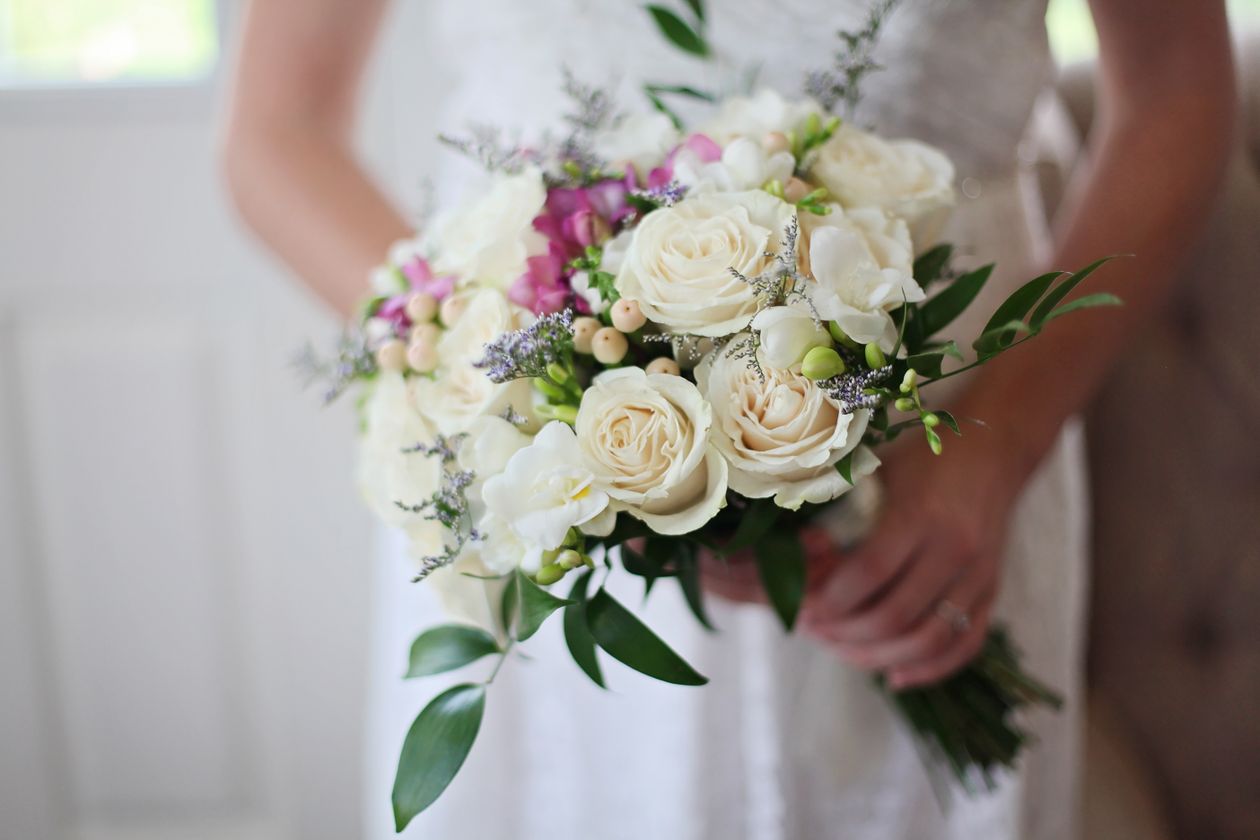
Venue flowers: the count follows the room
Ceremony pieces depend on the space: an arbor or arch arrangement, aisle markers, and entry pieces. Reception counts are table driven. One centerpiece per guest table is the baseline, scaled up in size for round tables of ten and down for smaller tables, plus arrangements for the head table, cake table, bar, and entry. Couples are routinely surprised that the room, not the wedding party, consumes most of the order once the guest list passes a hundred.
The pieces that get forgotten
Three items surface late in almost every planning process. Cake flowers, if you want fresh blooms on the cake, need to come from the florist so they match and are food safe in preparation. A toss bouquet protects the real bouquet, which many brides want to keep or have preserved. And petals, for a flower girl or an aisle scatter, are a separate line item, not something the kitchen or venue provides.
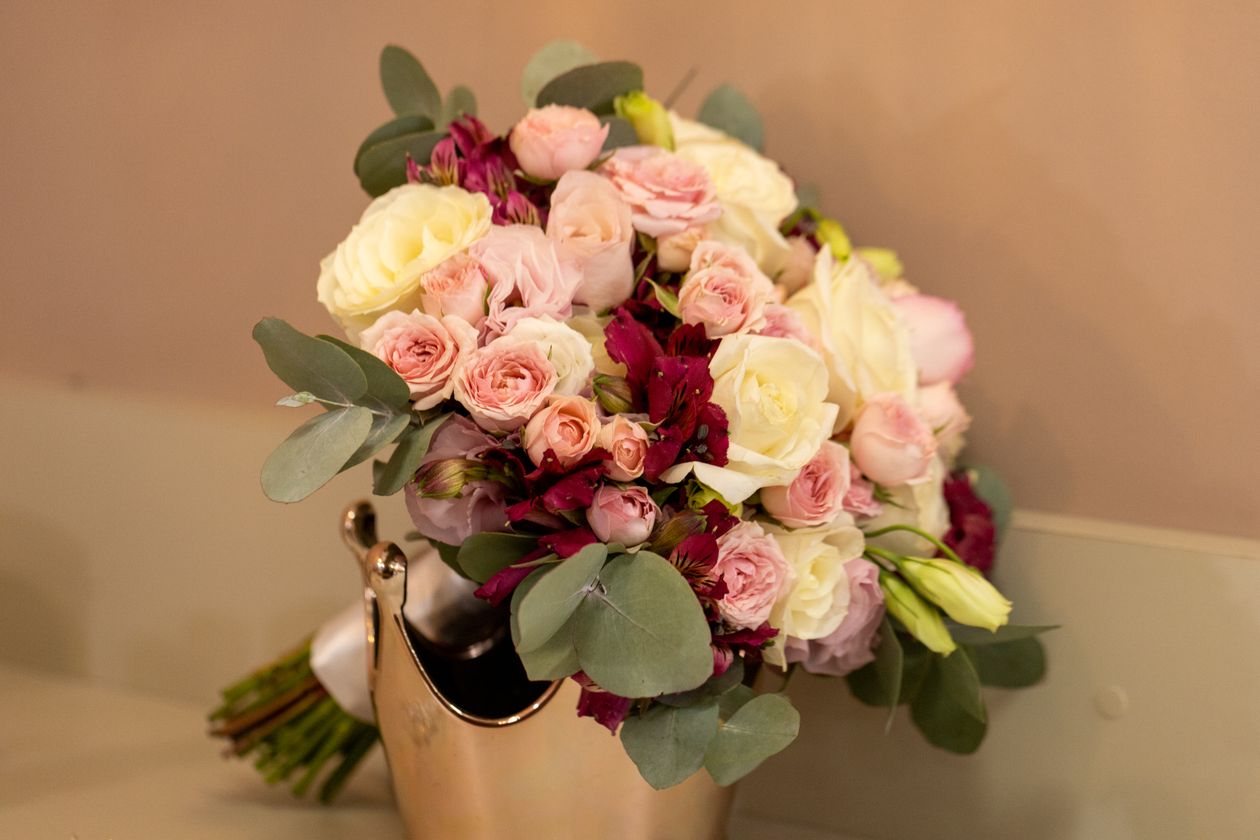
The useful way to use all this: bring your florist the people count, the table count, and photos of the venue. From those three numbers an experienced designer can sketch the full order in one sitting, and the arithmetic will stop feeling mysterious.
Where the stems inside each piece go
Inside a single bouquet, the count has its own logic. A designer builds in layers: focal flowers that carry the design, usually the largest and most expensive blooms, secondary flowers that fill the middle, small accents that add texture, and greenery that gives the arrangement its shape and movement. A bridal bouquet that reads as lush in photographs might hold a few dozen stems arranged so the focal flowers do the visible work. Bridesmaid bouquets scale that recipe down rather than redesigning it, which is why the party looks unified and why the per piece cost scales gently.
Centerpieces run on similar arithmetic with one extra variable: the container and the table's footprint. A low compote arrangement concentrates its stems into a dense dome, which is flower hungry for its size, while a tall arrangement on a stand spreads fewer stems across a bigger visual space. When a florist quotes two centerpiece styles at different prices for the same wedding, this density difference is usually the reason, and choosing the airier style for some tables is a legitimate design decision rather than a compromise.
Children in the wedding deserve a line in the count as well. Flower girls usually carry a small basket of petals or a miniature arrangement scaled for small hands, and ring bearers wear a boutonniere sized down so it does not overwhelm a small jacket. These are inexpensive pieces that take real design attention, because nothing in the photographs will be examined like the children, and nothing dates a flower order like forgetting them until the rehearsal.
Common questions
How many centerpieces do I need?
One per guest table as a baseline, plus pieces for the head table, cake table, and entry. Your final table count, set two to four weeks out, fixes the number.
Are bridesmaid bouquets just smaller versions of mine?
Usually, yes by design. They echo the bridal bouquet's flowers and colors at a smaller scale so the wedding party looks unified in photos.
What flowers do couples most often forget to order?
Cake flowers, a separate toss bouquet, and petals for the flower girl or aisle. All three are easy additions early and awkward scrambles late.
Photos in this guide are representative stock images.
← All guides from Lily Greenthumb's Wedding and Event Design← Back to Lily Greenthumb's Wedding and Event Design