Centerpieces fail in one specific way more than any other: a guest sits down, looks across the table at the person they were seated beside for conversation, and sees a wall of flowers. The arrangement was beautiful in the florist's studio and in the photographer's wide shots. At chair height, where the reception actually happens, it was an obstacle. Designing centerpieces is mostly the discipline of preventing that moment.
The two safe heights
Professional designers work in two zones. Low arrangements sit below eye level for seated guests, typically arranged in compotes or low vases, and decorate the table richly without crossing sightlines. Tall arrangements lift the flowers well above heads on tall, slim stands, so the blooms float over the room while the table level stays open. Both work. The dead zone is the middle, arrangements that top out right at seated eye level, roughly where a face should be.
- Set the sightline rule first: guests should see each other across the table without leaning. Low and lush, or tall and lifted, nothing in between.
- Match the arrangement footprint to the table. A centerpiece should leave room for plates, glassware, and the bread that always appears.
- Test with a chair's eye view. Sit at the table and look across. Your standing view in the showroom is not the guest's view.
- Keep scent in check at dinner. Heavily fragrant flowers compete with food. Save the strongest scents for entry and ceremony pieces.
- Plan the candle question with the venue's rules, not around them. Many venues require enclosed flames.
- Give the florist the table shape and count early. Round, farm, and banquet tables each want a different centerpiece geometry.
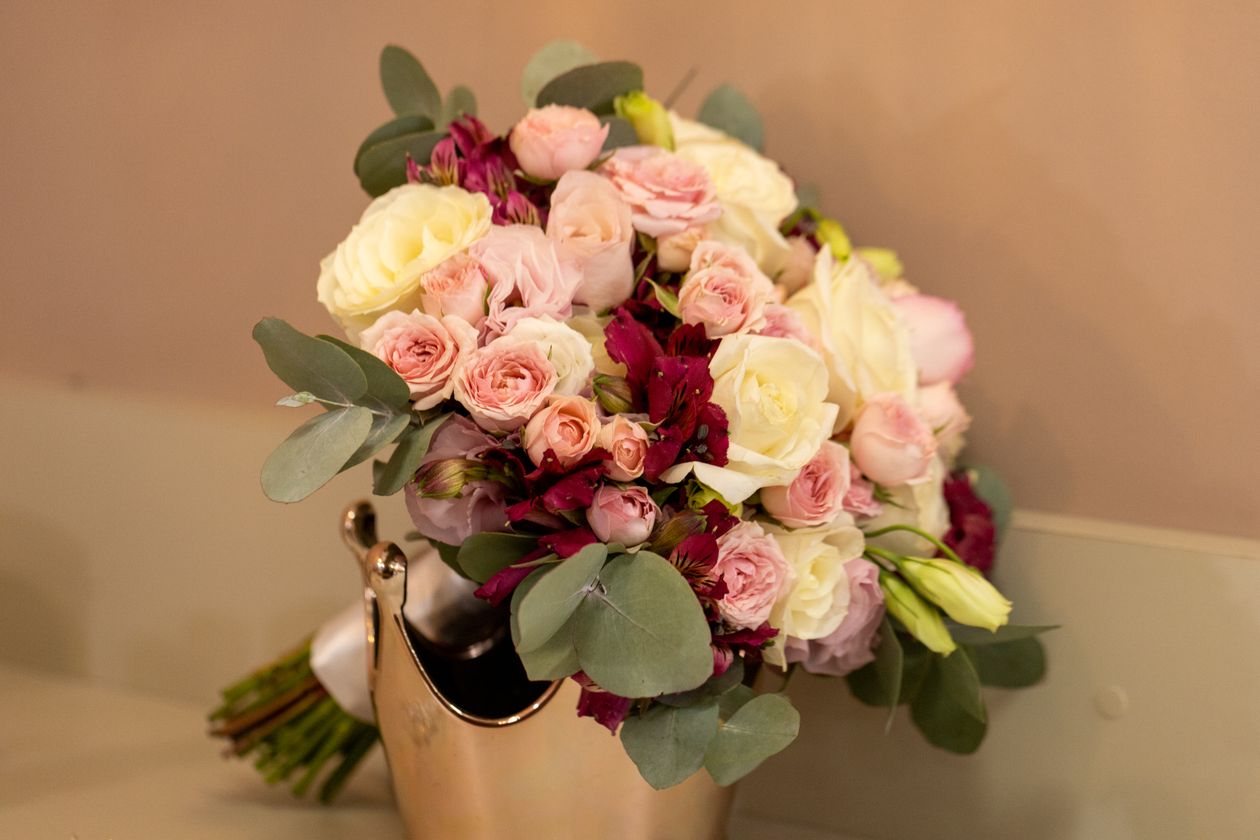
Shape follows the table
Round tables suit a single centered arrangement with a round footprint. Long farm or banquet tables suit a runner approach: a series of smaller arrangements, greenery, and candles spaced down the length, which also distributes the budget more evenly in photos. Head tables follow the room's camera angles, since they are the backdrop for toasts and first dance sightlines, and usually get the most deliberate design of all.
What this means for your budget conversation
Height is not where the money goes. Flower density is. A low, lush compote packed with garden roses costs more than a taller, airier arrangement with the same visual presence across a room. Couples who want impact across a big Charlotte ballroom often do better with a mix: some tables low and dense, some tall and airy. The mix photographs as intentional design and lets the florist put premium blooms where eyes actually rest.
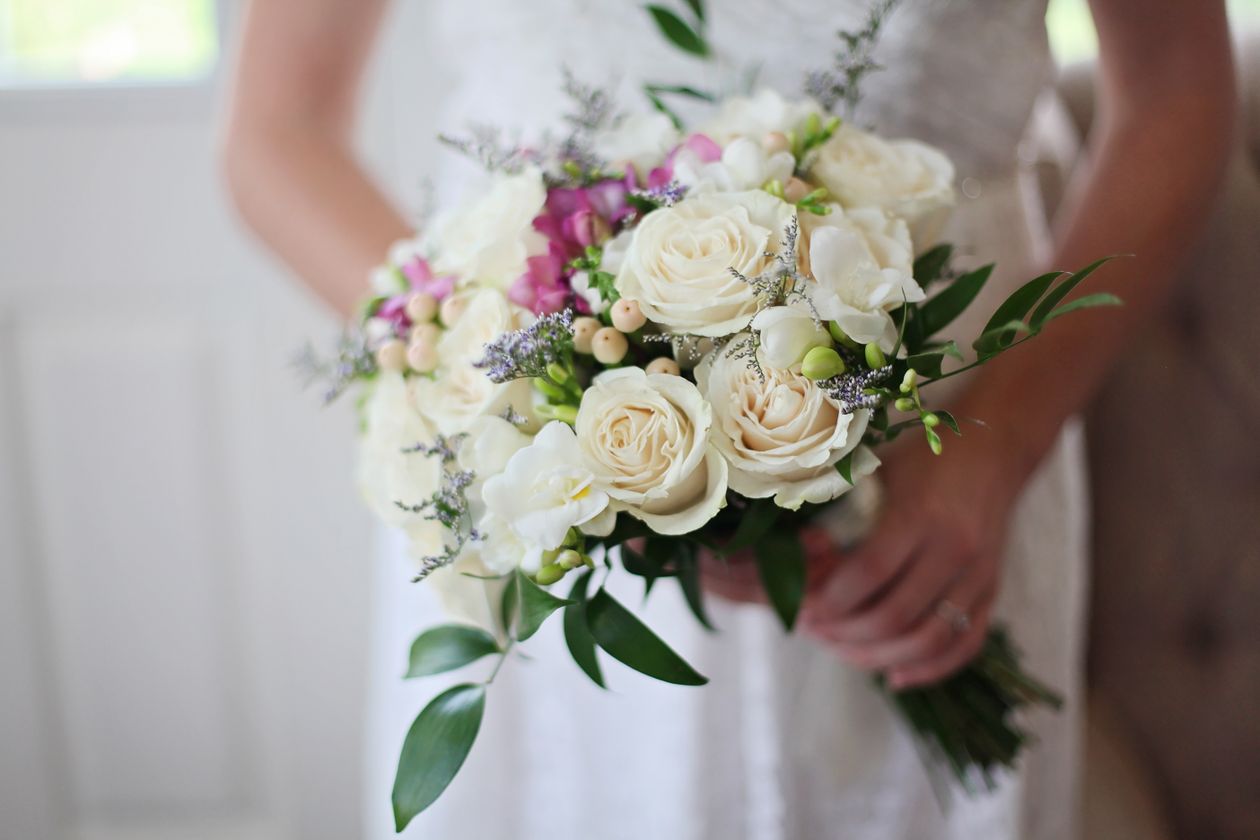
Bring your florist the floor plan and be honest about the guest experience you want. Designers solve sightline problems weekly. What they cannot do is read a room they have not been told about.
A note on photographs versus people
Centerpieces live a double life: four hours with your guests and forever in your photographs, and the two audiences want slightly different things. Cameras shoot receptions from standing height and from across the room, where taller arrangements read as drama and low ones can disappear. Guests experience the room from a chair, where the priorities reverse. Experienced designers split the difference by mixing heights across the room, which photographs as layered and intentional from every angle while keeping any single table's sightlines honest.
Tell your florist where the cameras will concentrate: the head table, the cake, the dance floor edge. Those sightlines deserve the most considered pieces, while guest tables can carry the simpler versions of the design without any guest feeling shortchanged. It is another version of the rule that placement beats volume, applied to the one room where your wedding will be looked at the longest.
One more guest level consideration is stability. Arrangements get brushed by sleeves, bumped by chairs, and leaned across all evening, so a good designer weights bases, keeps water levels sensible, and avoids top heavy builds on narrow stands. Ask to see how a tall piece is constructed if you are choosing one. The engineering is invisible when it is right, and it is part of what separates a designed centerpiece from flowers arranged in a tall vase and hoped for the best.
Common questions
How tall should wedding centerpieces be?
Either low, below seated eye level, or raised well above heads on slim stands. The middle height, right at face level, is the one that blocks conversation.
Do long tables need different centerpieces than round tables?
Yes. Long tables work best with a series of smaller arrangements and candles run down the length, while round tables suit one centered arrangement.
Should centerpiece flowers be scented?
Lightly at most. Strong fragrance competes with dinner. Designers usually place the most fragrant flowers at the entry and ceremony instead.
Photos in this guide are representative stock images.
← All guides from Lily Greenthumb's Wedding and Event Design← Back to Lily Greenthumb's Wedding and Event Design