A Charlotte wedding in July asks a lot of a flower. Bouquets leave the studio in the morning, spend the afternoon in hands, cars, and sunshine, and are expected to look fresh for portraits at six and a reception entrance at seven, in weather that can sit in the low nineties with humidity to match. Florists plan for this the way caterers plan for a drive: with conditioning, timing, and a few rules couples can help with. Here is the system.
The steps that keep flowers alive
- Condition before the day. Flowers are hydrated and held cool from arrival at the studio, so they start the wedding fully charged with water.
- Keep bouquets in water until the last moment. A vase of water at the venue is the bouquet's home base between photos, ceremony, and reception.
- Sequence photos smartly. Outdoor portraits in the coolest available window, shade over sun for waiting time, and bouquets carried rather than set on hot pavement.
- Mind the car. Flowers travel in air conditioning, never in a hot trunk, and never loose where they can be crushed.
- Repurpose with a plan. Ceremony pieces moving to the reception go straight into waiting vases, not onto a table in the sun while the room is flipped.
Flower choice is half the battle
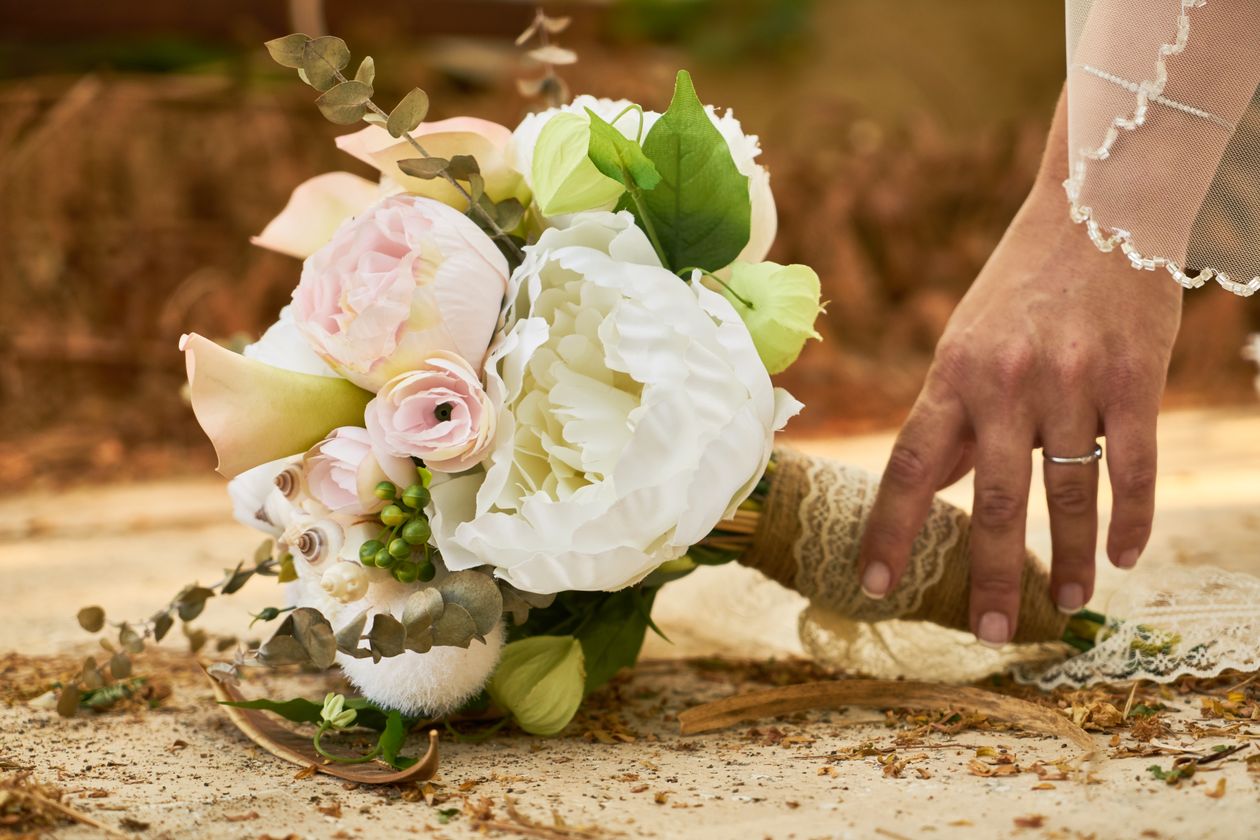
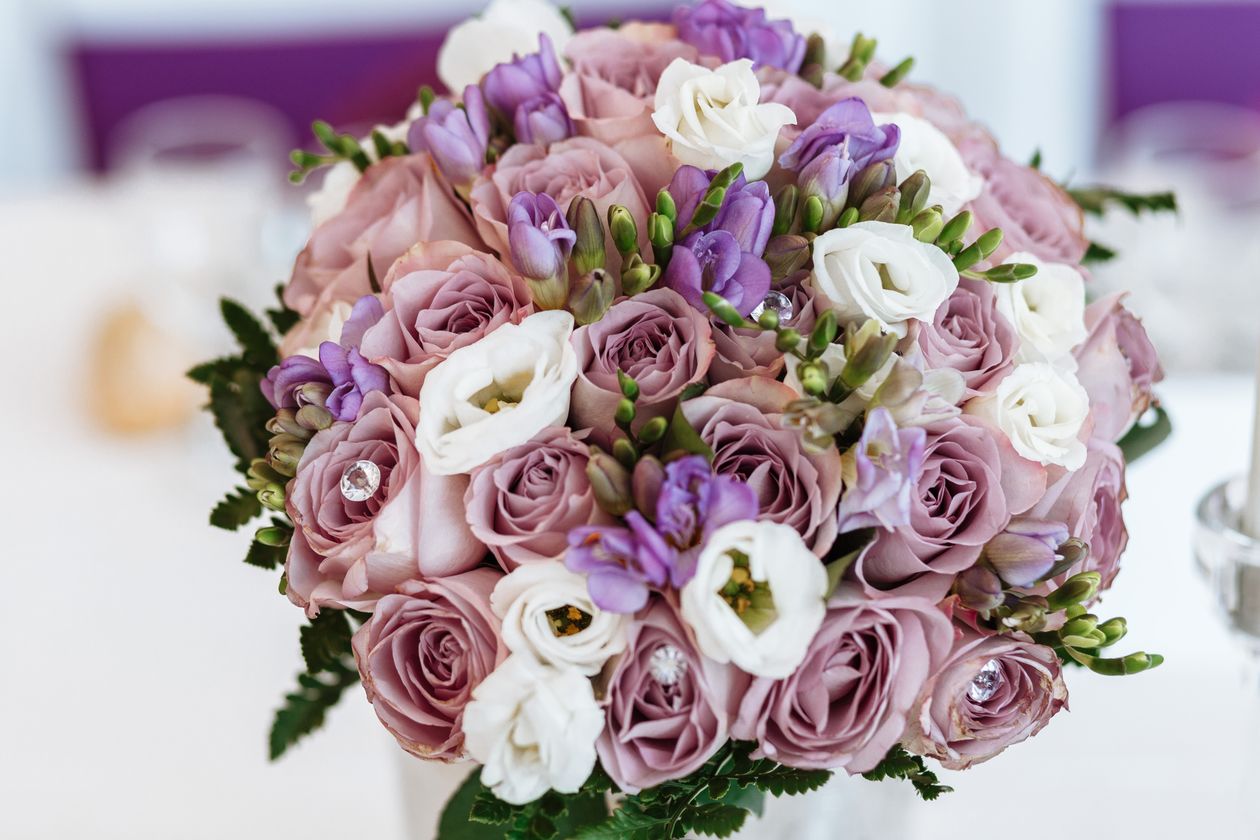
Some flowers are built for this. Roses, lisianthus, orchids, carnations, and zinnias tolerate hours out of water and heat that would finish other blooms. Hydrangea, sweet peas, and gardenias are the fragile end of the list: beautiful, and honest about their limits. For a summer wedding a florist may build the look around the hardy list and use the fragile flowers only in pieces that stay in water or shade, like a ceremony arrangement delivered close to start time.
Wilting is usually a water story, not a quality story. A cut stem seals and stops drinking, which is why florists recut stems and why a bouquet left in a hot car for an hour can look tired even though it was perfect at noon. The fix mindset, cool water and shade, prevents nearly all of it.
What couples can do on the day
Assign the bouquets a person. Someone in the wedding party whose quiet job is returning bouquets to their vases between events saves more flowers than any product. Keep the room where flowers wait air conditioned, and tell the photographer the plan, since most photographers know the heat rules and will happily sequence shade portraits first.
None of this requires worry, just choreography. Carolina florists deliver weddings through the whole summer. The flowers that fail are almost never the florist's. They are the ones that spent two unplanned hours in a parked car.
The reception is a second shift
Flowers that survive the ceremony still have the reception to work, and heat management changes shape indoors. Air conditioning is an ally, but a centerpiece placed in a vent's direct blast dries out almost as fast as one in the sun, because moving air strips moisture from petals. When you walk the reception room, check what hangs over the tables. A quick word with the venue about which vents blow directly onto centerpieces can save arrangements that would otherwise fade by the cake cutting.
The last heat rule concerns the exit. If flowers are going home with guests or being saved for preservation, they should travel in the cool car, in water where possible, and be dealt with that night rather than after the wedding weekend. A bouquet put in a vase of cool water on the wedding night, stems recut, will often look startlingly fresh at brunch the next morning. Flowers are tougher than their reputation, provided the water and temperature rules are honored at each handoff, which is all a florist's system ever was.
There is one more heat source couples forget: hands. A bouquet held for an hour of portraits is being warmed the whole time, and the stems' cut ends dry against palms and dress fabric. Florists wrap handles partly for looks, but the ribbon also insulates. Between photo setups, rest the bouquet stems down in its vase rather than cradling it continuously. Small kindnesses like that, repeated across a hot afternoon, are worth a visible difference by the reception.
Common questions
How do florists keep flowers fresh all day in summer?
By conditioning them in cool water before the day, delivering close to event time, and keeping arrangements in water and shade between each part of the schedule.
Which flowers wilt fastest in heat?
Hydrangea, sweet peas, and gardenias are among the most fragile. Roses, lisianthus, orchids, and zinnias are notably hardier for summer weddings.
Can a wilted bouquet be revived?
Sometimes, if it is mainly dehydrated: recut stems and a rest in cool water can recover many flowers. Heat damaged blooms, though, do not come back.
Photos in this guide are representative stock images.
← All guides from Lily Greenthumb's Wedding and Event Design← Back to Lily Greenthumb's Wedding and Event Design